
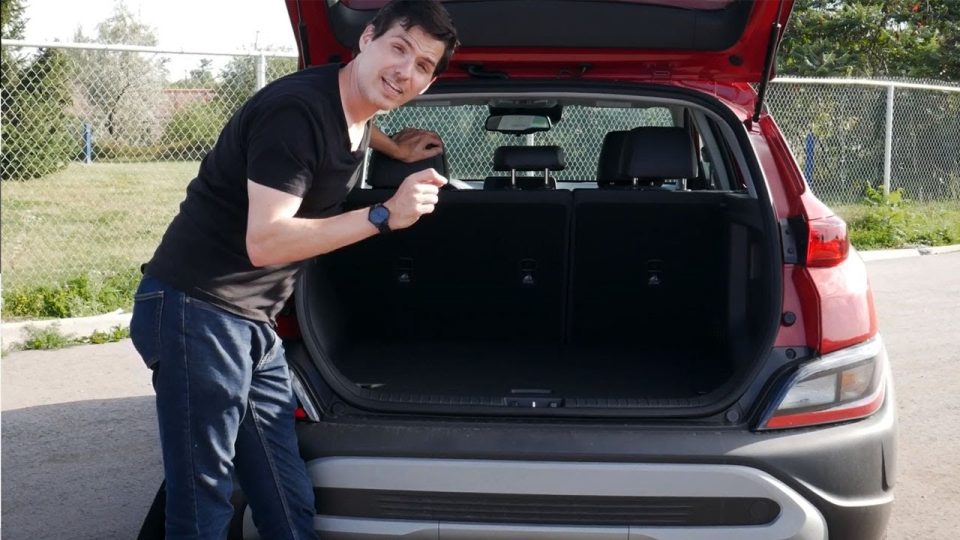
The 2024 Hyundai Kona offers 25.5 cubic feet of cargo space behind the rear seats and expands to 63.7 cubic feet with the rear seats folded flat. This is a significant jump from the previous generation, which offered only 19.2 cu ft—the 2024 redesign brought a noticeably larger and more practical cargo area. If you are researching “hyundai kona trunk space“ in 2026, you’ll find that this extra room makes it one of the most versatile subcompact SUVs for weekend trips or grocery hauls.
For a subcompact SUV, these numbers are competitive. The Kona’s cargo floor is relatively flat, the opening is wide, and the load floor sits at a comfortable height. It’s not going to haul furniture, but for groceries, strollers, gym bags, and weekend trips, it does the job well.
Hyundai Kona Trunk Space by Generation
| Model Year | Cargo (Seats Up) | Cargo (Seats Folded) | Notes |
|---|---|---|---|
| 2024-2025 (3rd gen) | 25.5 cu ft | 64.8 cu ft | Major redesign – significantly more space |
| 2022-2023 (2nd gen) | 19.2 cu ft | 54.0 cu ft | Previous gen – notably smaller |
| 2018-2021 (1st gen) | 19.2 cu ft | 45.8 cu ft | Original generation – most compact |
How the Kona Compares to Competitors
| SUV | Cargo (Seats Up) | Cargo (Max) | Class |
|---|---|---|---|
| Hyundai Kona (2024) | 25.5 cu ft | 64.8 cu ft | Subcompact SUV |
| Honda HR-V | 24.4 cu ft | 58.8 cu ft | Subcompact SUV |
| Toyota Corolla Cross | 25.2 cu ft | 57.9 cu ft | Subcompact SUV |
| Chevrolet Trailblazer | 25.3 cu ft | 54.4 cu ft | Subcompact SUV |
| Ford Escape | 37.5 cu ft | 65.4 cu ft | Compact SUV (larger class) |
| Nissan Kicks | 25.3 cu ft | 53.1 cu ft | Subcompact SUV |
The 2024 Kona ranks at or near the top of its subcompact class – besting most rivals in both seat-up and seat-folded configurations.
Hyundai Kona EV vs Standard Kona – Cargo Differences
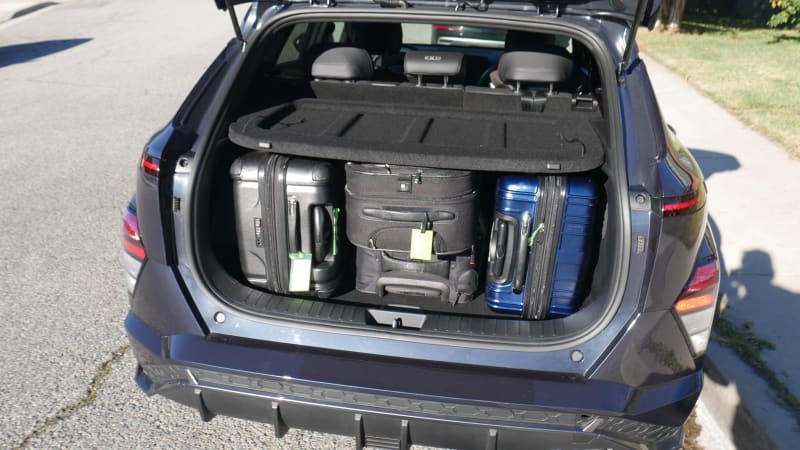
The Kona Electric has slightly different cargo dimensions due to its battery placement. The 2024 Kona Electric offers approximately 23.3 cu ft behind the rear seats – about 2 cu ft less than the standard gasoline model. The underfloor storage is not available in the EV, so that small frunk-style space is absent.
| Version | Cargo (Seats Up) | Cargo (Seats Down) | Frunk? |
|---|---|---|---|
| Kona Gasoline | 25.5 cu ft | 64.8 cu ft | No |
| Kona Electric | 23.3 cu ft | 56.0 cu ft | No (battery under rear) |
Tips to Maximize Cargo Space in the Kona
- Use cargo organizers or collapsible bins – the flat floor makes them easy to use.
- The 60/40 split rear seats allow you to fold one side while keeping a passenger seat.
- A roof cargo box or rack adds significant carrying capacity for road trips.
- Cargo nets or tie-down hooks (standard on most trims) prevent items from sliding.
- The under-floor storage compartment (in non-EV models) is perfect for the emergency kit, cables, or small valuables.
Who Should Buy the Kona Based on Space Needs?
- Solo drivers and couples: The Kona’s cargo space is more than enough for everyday use.
- Small families: Works well for day trips, school runs, and light travel – but a compact SUV may be more practical for regular family hauling.
- City dwellers: The Kona’s compact footprint makes urban parking easy while still offering respectable cargo room.
- Pet owners: A medium-sized dog fits comfortably in the rear cargo area with the seat down.
The 2024 Kona’s cargo redesign was one of its most meaningful upgrades. If you’re choosing between the 2022 and 2024 model, the extra 6+ cubic feet of cargo space is a genuinely significant improvement that makes the newer model worth the price difference.
